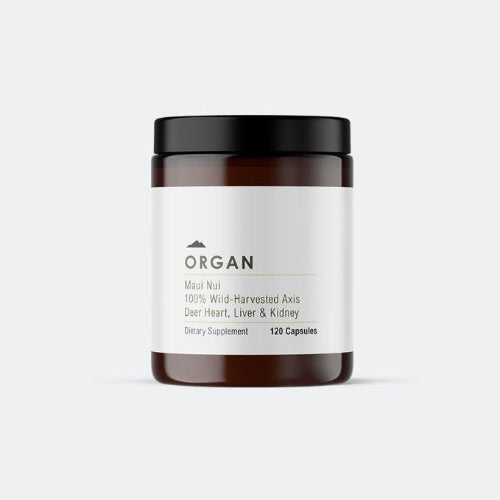
Wild axis deer organs in a capsule—concentrated nutrients muscle meat skips
120 capsules of lyophilized liver, heart, and kidney from wild-harvested Hawaiian axis deer. No taste or smell in capsule form, high heme iron and fat-soluble vitamins (A, B12, CoQ10) absent in muscle alone. Sourced from animals foraging volcanic Maui soil.
Evidence
2/5
No RCTs or meta-analyses have tested organ meat supplements for any health outcome. Observational data show that organ meats are nutrient-dense whole foods, but the supplement form (freeze-dried, concentrated) has not been studied in humans. Marketing claims about energy, longevity, or organ support rest on the nutrient profile alone, not outcome evidence.
Mechanism
Organ meat supplements (often called 'nose-to-tail' products) supply concentrated micronutrients, amino acids, and bioactive compounds like CoQ10, carnitine, and B vitamins found in animal organs. The proposed mechanism is nutritional repletion—restoring deficiencies in these cofactors that support mitochondrial function, energy metabolism, and cellular repair.
Best evidence type
✓
Tried it? Verify this find to help others know it works. Members can verify, free to join.
0 comments
Join the conversation.Members can comment, verify, and save finds. Free.
EOD publishes opinions and summaries of research about supplements, services, and protocols. It is not medical advice. Consult a qualified healthcare provider before changing your supplement, exercise, sleep, or medication regimen.
Some outbound links on EOD are affiliate links. If you buy through them we may earn a small commission, at no extra cost to you. It never influences what we publish or how it's ranked. Full disclosure.
“BACKGROUND: Studies on intrahousehold inequality in food distribution typically have focused on the distribution of total energy within the household.”
“Previous studies have shown that hydroxytyrosol (HT) can be a potential alternative therapeutic agent for the treatment of rheumatoid arthritis (RA).”
Caveats
Organ supplements are not regulated as drugs and vary widely in potency and purity. No human trials have measured whether supplemental organ extracts improve biomarkers, symptoms, or disease risk compared to placebo or whole-food controls. The nutrient density of whole organ meat is well-established, but capsule/powder bioavailability and efficacy are unstudied. Contamination risk (heavy metals, pathogens) is a concern with any animal-derived supplement and should be verified by third-party testing.
0 comments
Join the conversation. Members can comment, verify, and save finds. Free.
Sign in to comment