1
Product$16.00◆ Editor's Pick
PLAY Everyday Face Lotion SPF 50 Fragrance-Free
A feel-good, non-greasy sunscreen face lotion that layers well under makeup, blends in clear with no white cast and delivers 24 hours of hydration¹.
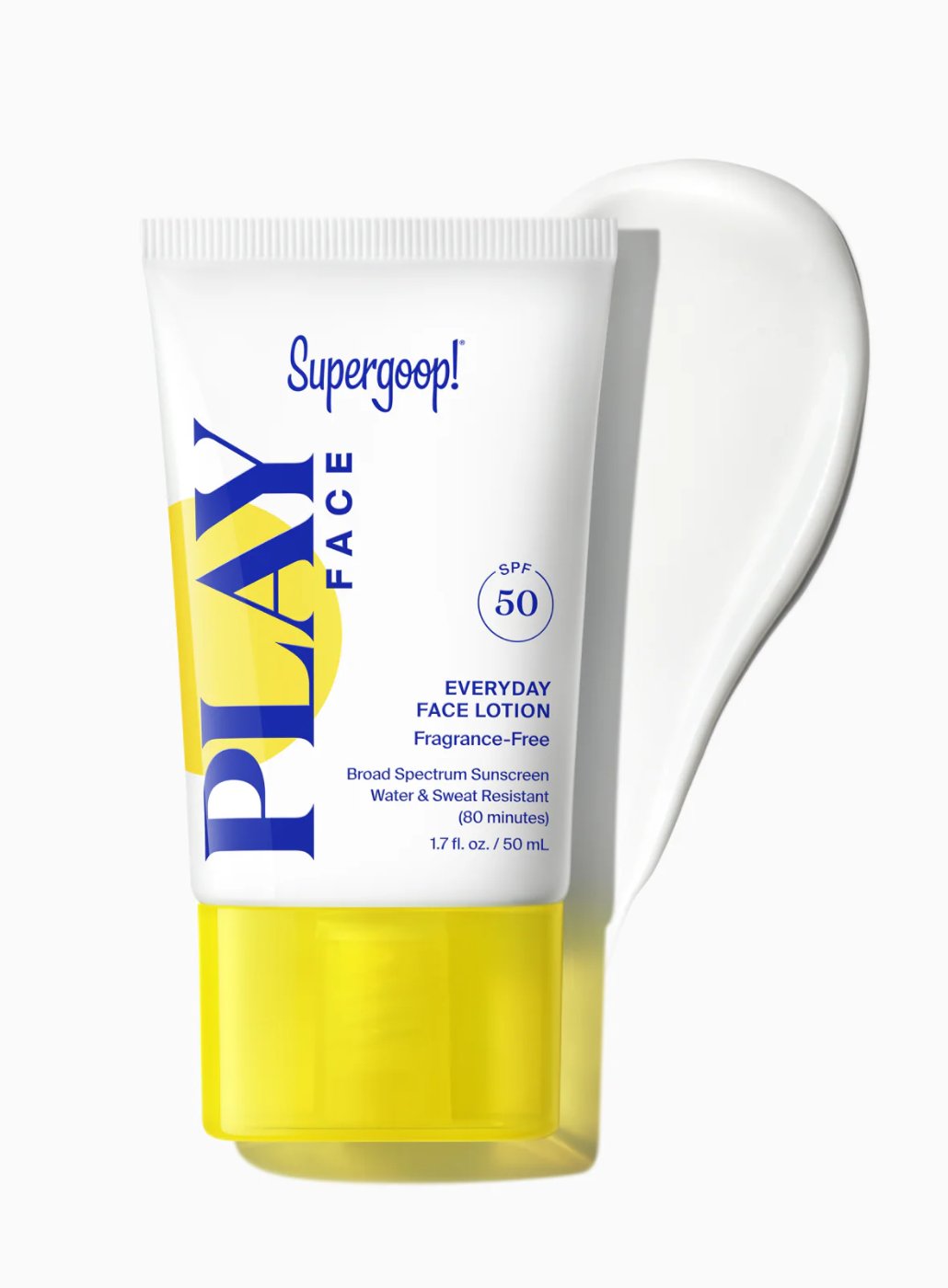
A feel-good, non-greasy sunscreen face lotion that layers well under makeup, blends in clear with no white cast and delivers 24 hours of hydration¹.
Multiple meta-analyses and large prospective cohorts (including the Nurses' Health Study and Australian cohorts) show that regular sunscreen use reduces melanoma incidence by 40–50% and non-melanoma skin cancer by 60–80%. SPF 50 provides meaningful additional protection over SPF 30, though the incremental gain diminishes at higher SPFs. Consistent application and reapplication are critical; real-world protection is often lower than labeled SPF due to under-application.
Sunscreen with SPF 50 blocks or absorbs ultraviolet (UV) radiation, primarily UVB rays that cause sunburn and DNA damage in skin cells. SPF 50 indicates it allows approximately 1/50th of UVB rays to reach the skin. Broad-spectrum formulations also filter UVA rays, which penetrate deeper and contribute to photoaging and melanoma risk.
EOD publishes opinions and summaries of research about supplements, services, and protocols. It is not medical advice. Consult a qualified healthcare provider before changing your supplement, exercise, sleep, or medication regimen.
Some outbound links on EOD are affiliate links. If you buy through them we may earn a small commission, at no extra cost to you. It never influences what we publish or how it's ranked. Full disclosure.
EOD · 123 Placeholder Street, New York, NY 10001
May be an affiliate link.
Meta-analysis
“ObjectiveDespite the reported benefits of sunscreen use in preventing skin cancer, the overall protection from melanoma and non-melanoma skin cancers putatively reflects the frequency of use and sunscreen type.”
“Melasma is a pigmentary disorder characterized by hyperpigmented patchy skin in sun-exposed areas, especially the face.”
“BACKGROUND: UVA1 rays (340-400 nm) contribute to carcinogenesis, immunosuppression, hyperpigmentation, and aging.”
Sunscreen efficacy depends heavily on application thickness (most people apply 25–50% of the recommended 2 mg/cm²) and reapplication every 2 hours, especially after swimming or sweating. Some studies show sunscreen use correlates with increased sun exposure time (behavioral offset), potentially reducing net benefit. Chemical sunscreens (oxybenzone, avobenzone) have raised concerns about systemic absorption and endocrine effects, though regulatory agencies have not restricted them; mineral sunscreens (zinc oxide, titanium dioxide) avoid these concerns but may be less cosmetically elegant. SPF only measures UVB protection; UVA protection varies by formulation and is not standardized in the US.

0 comments
Join the conversation. Members can comment, verify, and save finds. Free.
Sign in to comment