0
Rx$30.00◆ Editor's Pick
Nurx Azelaic acid 15%
Azelaic acid† is a topical treatment that may be prescribed to treat acne or rosacea. Convenient and affordable prescriptions and tests delivered with free shipping. $30 for 1 month supply.
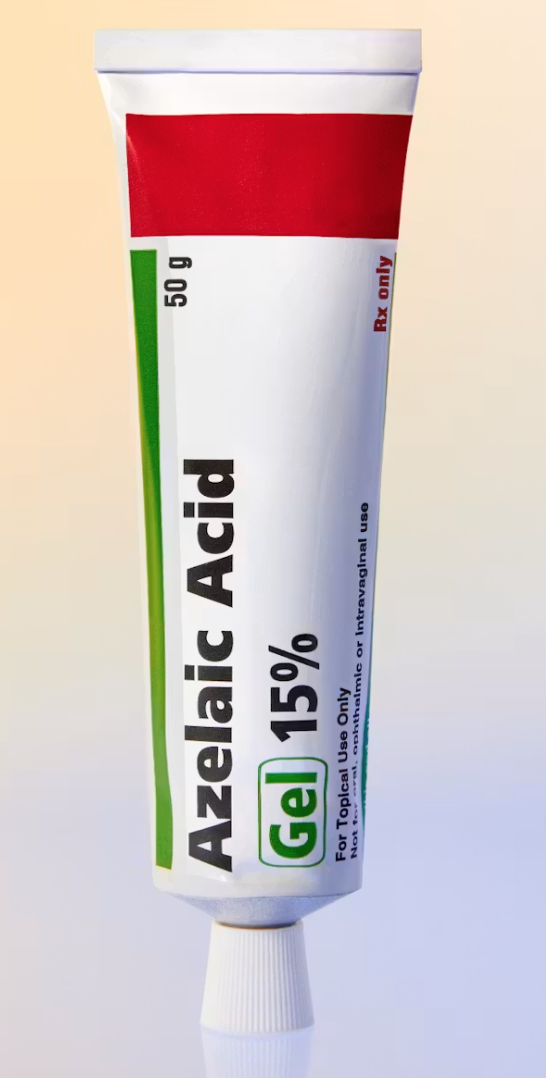
Azelaic acid† is a topical treatment that may be prescribed to treat acne or rosacea. Convenient and affordable prescriptions and tests delivered with free shipping. $30 for 1 month supply.
Multiple RCTs demonstrate efficacy for acne and rosacea. A 2015 meta-analysis found azelaic acid superior to placebo for inflammatory acne lesion reduction and comparable to benzoyl peroxide and tretinoin in head-to-head trials. For rosacea, RCTs show significant improvement in erythema and papulopustules. The evidence base is robust across both indications.
Azelaic acid is a dicarboxylic acid that reduces sebum production, inhibits Cutibacterium acnes (formerly Propionibacterium acnes) growth, and suppresses inflammatory mediators including TNF-α and IL-8. It also has mild tyrosinase inhibition, reducing melanin synthesis, which contributes to its use in hyperpigmentation and rosacea.
EOD publishes opinions and summaries of research about supplements, services, and protocols. It is not medical advice. Consult a qualified healthcare provider before changing your supplement, exercise, sleep, or medication regimen.
Some outbound links on EOD are affiliate links. If you buy through them we may earn a small commission, at no extra cost to you. It never influences what we publish or how it's ranked. Full disclosure.
EOD · 123 Placeholder Street, New York, NY 10001
May be an affiliate link.
Randomized trial
“Acne vulgaris, commonly called acne, is a skin condition affecting many individuals globally.”
“Acne vulgaris is a common, multifactorial, inflammatory skin disease affecting the pilosebaceous unit.”
“BACKGROUND: Twenty percent azelaic acid gel is recommended as a topical treatment for acne due to its favorable profile.”
“OBJECTIVE: We conducted a review of topical agents currently used in melasma, discussing their mechanism of action, efficacy, safety, and tolerability, with an update on newer treatments.”
Most trials are 12–16 weeks; longer-term safety and efficacy data are limited. Head-to-head comparisons with modern alternatives (e.g., oral antibiotics, isotretinoin for severe acne) are sparse. Tolerability varies; some patients report irritation, particularly early in treatment. Hyperpigmentation benefit is modest and slower than with hydroquinone or combination regimens.

0 comments
Join the conversation. Members can comment, verify, and save finds. Free.
Sign in to comment