0
Product$16.10
COSRX Vitamin E Sunscreen SPF 50+ | Dewy Finish, No White Cast
SPF 50+ daily sunscreen enriched with vitamin E for hydration and glow. Leaves no white cast, wears perfectly under makeup, and protects the skin barrier.
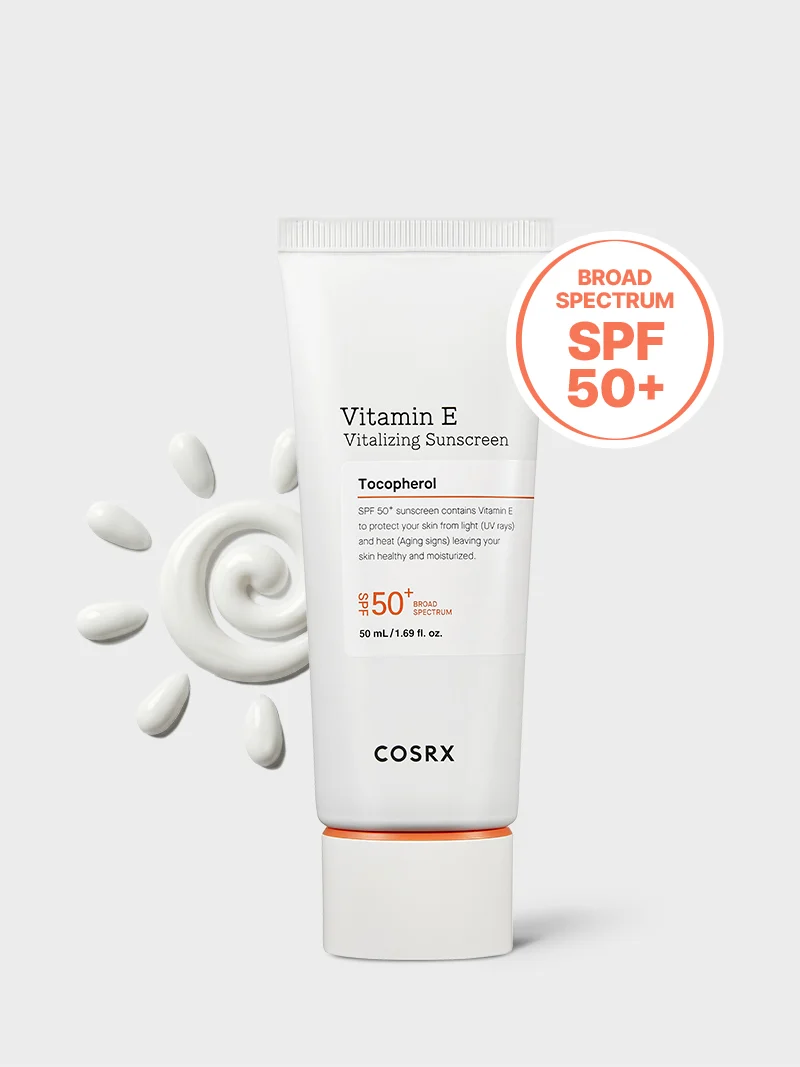
SPF 50+ daily sunscreen enriched with vitamin E for hydration and glow. Leaves no white cast, wears perfectly under makeup, and protects the skin barrier.
Multiple meta-analyses and large prospective cohorts (including the Nurses' Health Study) confirm that regular sunscreen use reduces melanoma incidence by ~40–50% and non-melanoma skin cancer by ~40%. SPF 50+ provides meaningful additional protection over SPF 30 for UVB, though the incremental gain diminishes at higher SPF values. Mechanism is well-established: UV radiation causes thymine dimers and oxidative stress in skin cells, leading to mutation and malignant transformation.
Sunscreen with SPF 50+ contains UV-absorbing or reflecting compounds (organic filters like avobenzone, or inorganic filters like zinc oxide) that block or scatter ultraviolet radiation, reducing penetration of UVA and UVB rays into the skin. This prevents DNA damage in keratinocytes and melanocytes, which is the initiating event for photoaging and skin cancer.
EOD publishes opinions and summaries of research about supplements, services, and protocols. It is not medical advice. Consult a qualified healthcare provider before changing your supplement, exercise, sleep, or medication regimen.
Some outbound links on EOD are affiliate links. If you buy through them we may earn a small commission, at no extra cost to you. It never influences what we publish or how it's ranked. Full disclosure.
EOD · 123 Placeholder Street, New York, NY 10001
May be an affiliate link.
Meta-analysis
“BACKGROUND: It is now recognized that both ultraviolet (UV)-A and UVB wavelengths participate in the generation of photodamaged human skin during sun exposure.”
“As well as for topically used dermatological agents, studies performed according to the rules of evidence-based medicine (EBM) are also needed for cosmetics.”
“There is limited empirical evidence regarding differences in sun protection practices in different regions of the USA.”
“BACKGROUND: Melanoma is attributable to predisposing phenotypical factors, such as skin that easily sunburns and unprotected exposure to carcinogenic UV radiation.”
Sunscreen efficacy depends heavily on application amount (most people apply 25–50% of the recommended 2 mg/cm²), reapplication frequency, and water resistance. SPF measures only UVB protection; broad-spectrum formulations are needed for UVA coverage. Some studies show sunscreen use correlates with increased sun exposure time (behavioral offset), which can reduce net benefit. Rare allergic reactions to chemical filters (e.g., oxybenzone) occur; mineral filters are generally safer but may leave white cast. Long-term safety of some organic UV filters (e.g., oxybenzone systemic absorption) remains incompletely characterized.

0 comments
Join the conversation. Members can comment, verify, and save finds. Free.
Sign in to comment